What is Heschel’s Educational Philosophy?
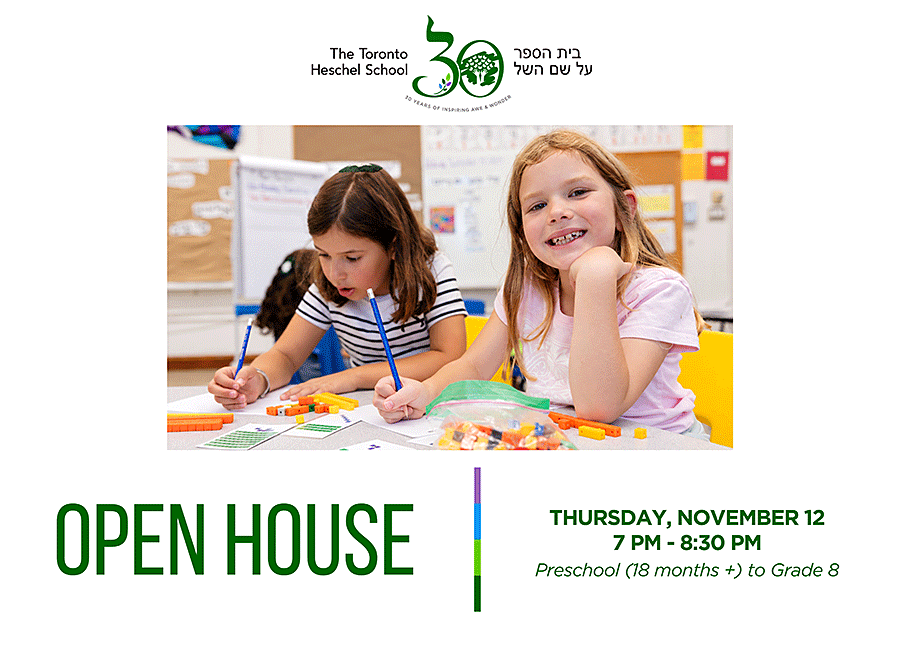
Our educational philosophy is built on integrated, inquiry-based learning. Students explore meaningful questions through hands-on, interdisciplinary projects, fostering deep conceptual understanding, creativity, empathy, and critical thinking. Inspired by Rabbi Abraham Joshua Heschel, we encourage students to experience learning through awe, wonder, and curiosity.
What are the Benefits of an Arts-Integrated Curriculum?
The Toronto Heschel School employs the diverse arts as methods for teaching in all areas of the curriculum. The arts are effective tools for learning basic facts, thinking skills, and complex ideas. Teaching through the arts has been shown to invigorate student engagement and connection to material. Learning Jewish texts and concepts through the arts creates a deep, meaningful connection to the material. Moreover, learning through the arts has been shown to enhance abilities such as lateral thinking, organizational skills and long-term planning.
What Languages are Taught at the School?
The Toronto Heschel School offers a multilingual education that emphasizes the importance of language as a tool for cultural connection, communication, and academic enrichment. Languages taught are:
Hebrew:
Core Language: Hebrew is taught from preschool through junior high as part of our commitment to fostering a strong connection to Jewish identity, tradition, and culture.
Immersive Approach: Students develop fluency in reading, writing, and speaking Hebrew through engaging lessons, literature, and cultural activities, taught by native Hebrew speakers.
English:
Academic Foundation: English is the primary language of instruction for general studies, focusing on literacy, critical thinking, and effective communication.
Creative Expression: Students explore storytelling, poetry, and essays, honing their writing and presentation skills.
French:
Additional Language Learning: Starting in Grade 2, French is introduced to develop global awareness and language acquisition skills.
Practical Application: Students learn conversational French, grammar, and cultural context through interactive lessons.
Why Multilingual Education?
Cultural Connection: Hebrew and French deepen students’ appreciation and respect for their heritage and global diversity.
Cognitive Benefits: Learning multiple languages enhances empathy, problem-solving skills, listening skills, memory, and overall academic performance.
Future Preparedness: Multilingual students are better equipped to expand their own perspectives and succeed in a globalized world.
What is Heschel’s approach to Standardized Testing?
At The Toronto Heschel School, we believe meaningful education goes far beyond memorization and standardized test scores. Standardized tests offer only a narrow snapshot of student understanding and often fail to capture the depth of a child’s creativity, potential, and diverse talents. Here’s why Heschel chooses a different path:
1. Learning Beyond Test Scores
Standardized assessments primarily measure specific academic skills, overlooking essential qualities like curiosity, creativity, problem-solving ability, enthusiasm, and empathy—skills critical for lifelong success. For instance, while a test might evaluate musical theory knowledge, it cannot capture the originality and creativity of a student’s musical composition.
2. A Rich, Interdisciplinary Curriculum
Research indicates that excessive emphasis on standardized testing can narrow educational experiences, limiting time for social studies, science, and the arts. At Heschel, our robust, interdisciplinary curriculum encourages students to think deeply, creatively, and connect concepts across subjects, rather than simply learning to pass tests.
3. Prioritizing Authentic Learning
We emphasize genuine inquiry, exploration, and hands-on experiences, believing classroom time is better spent fostering meaningful learning rather than repetitive test preparation. Our approach keeps students engaged, curious, and passionate about learning.
4. Accurately Measuring Student Growth
Test scores can be influenced by factors like anxiety and external pressures, providing only a limited perspective on student growth. At Heschel, we utilize authentic, ongoing assessments such as projects, presentations, and teacher observations, offering a comprehensive view of each student’s development and progress.
5. Preparing Students for Lifelong Success
True success requires critical thinking, collaboration, adaptability, and creativity—skills that standardized tests typically fail to measure. At Heschel, our educational approach is specifically designed to nurture these abilities, ensuring students can apply their knowledge effectively in real-world contexts.
By emphasizing engagement, exploration, and interdisciplinary learning, Heschel cultivates confident, capable individuals ready to thrive not only in high school but throughout their lives.
How does the Curriculum Prepare Students for High School and Beyond?
Heschel’s exceptional academic program equips students with the skills, knowledge, and confidence to excel in high school and beyond. At Heschel, we believe in nurturing the whole child. Our Habits of Heart, Mind, Body, and Soul framework ensures that students develop intellectually, emotionally, physically, and ethically, preparing them not just for high school, but for life.
Heart: We foster empathy, kindness, and ethical responsibility, helping students build strong relationships, navigate challenges, and engage meaningfully in their communities. Through collaborative projects, social-emotional learning, and Jewish values, students develop emotional intelligence and moral clarity.
Mind: We encourage critical thinking, curiosity, and intellectual agility. Students learn to ask thoughtful questions, explore multiple perspectives, and apply their knowledge across disciplines. Our inquiry-based approach ensures they develop strong problem-solving and analytical skills.
Body: Physical well-being is essential for learning. Movement, hands-on experiences, and outdoor exploration are integrated into daily activities to promote health, focus, and resilience. Students engage in active learning through experiential projects, drama, and nature-based education.
Soul: A sense of purpose and spiritual connection enriches a student’s learning experience. We cultivate self-reflection, mindfulness, and a deep appreciation for Jewish values and traditions, empowering students to engage meaningfully with their identity and the world around them.
By balancing these four dimensions, Heschel graduates emerge as independent, confident learners who are creative problem-solvers, effective communicators, and compassionate leaders—ready to thrive in high school and beyond.